When That Last Friend Becomes Single and Yall Can Go Out Being Hoes Together Again Mem
How lockdowns are irresolute our friendship groups
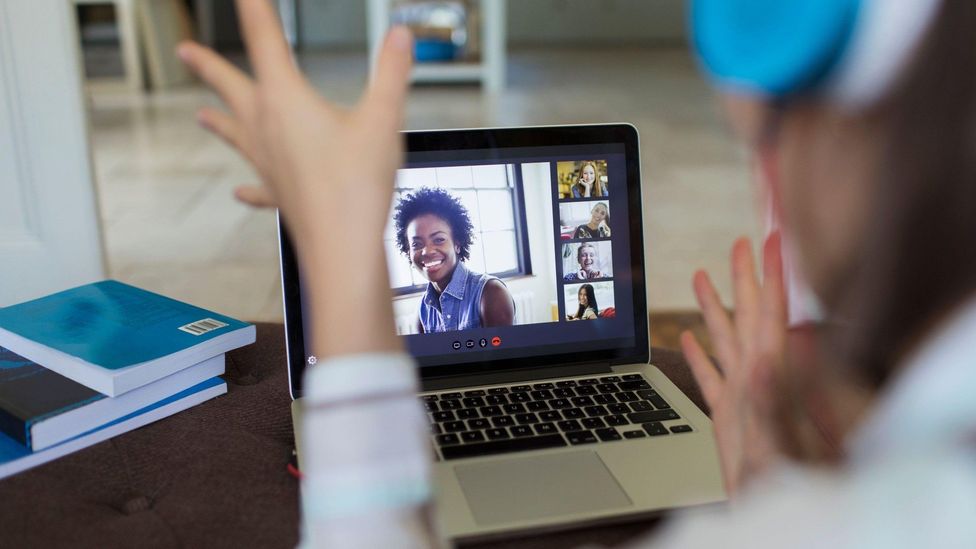
New research suggests lockdowns are re-shaping our social networks. What does that mean for our post-Covid relationships?
K
Karen Lamb, by her own admission, was a bit of a social butterfly before a coronavirus spike prompted a second, severe lockdown in the Australian city of Melbourne, where she lives. The 35-yr-old statistician would go to the theatre, weekly choir and go-get dancing classes and spend lots of time with friends. Lockdown has disrupted Lamb's social behaviour and networks. Her world has shifted online, and sometimes Lamb tin feel lonely.
She's not solitary: huge volumes of people reported feeling lonely in the first wave of coronavirus lockdowns earlier this year. According to research by loneliness expert Dr Michelle Lim, of Swinburne Academy of Technology, one in two Australians reported feeling lonely during the outset lockdown. In Great britain and the United states, the ratio was ii out of three.
Now, researchers in Commonwealth of australia are examining how these enforced periods of isolation are changing our social interactions. Although the pandemic is playing out differently in nations around the earth – European nations are moving back toward tighter restrictions while Australia is emerging out of them – nosotros share a question: if lockdowns are changing the way nosotros socialise, what does that mean for how long our loneliness will last?
Consolidating friendship networks
The enquiry is a joint projection betwixt two academics, Dr Marlee Bower, a loneliness researcher at the University of Sydney, and sociologist Dr Roger Patulny of the University of Wollongong. Initial results of a tracking survey they sent to almost 2,000 Australians take showed some meaning pandemic-linked behavioural changes are underway.
Bower says that in open up-ended responses to the survey, many people indicated that they had begun to shrink their social networks. "They would socialise with not every bit many people equally earlier, but rather a very item sub-group," she says. "For people who have connections to draw on and are able to leverage their existing friendships online, they're doing pretty well. In many instances, they're closer to the friends they had."
That'south been the example for Lamb, who is Scottish but has lived in Melbourne for eight years. Before the lockdown, she would speak to Amy, ane of her oldest friends, about four or five times a year. Now they conversation every Thursday, at a fixed time, and both wonder why they haven't always done and so.
Some of her other friendships, however, have not fared then well. "I've constitute information technology easier to go on in touch with my Scottish folk than with my Australian folk," says Lamb. "I've just not had that online relationship with my Australians. I've found that over the concluding six months I've get much more than detached from my mean solar day-to-day pals."
"When social interactions moved online, merely sure kinds of relationships seemed to survive," explains Bower. Once the local or community context of a relationship was taken away, it was relationships where those in it had something in common too their shared work or hobby interest, where everyone felt comfortable with digital technology, that managed to hold together or become stronger. Many wanted to share their pandemic stress with those to whom they felt closest; former friends from home towns and very close local friends.
"Considering the majority of social interaction occurred online, it meant that socialising with people who live locally was just equally like shooting fish in a barrel as socialising with people who live on the other side of the world. This meant that people could socialise and reconnect with people who they were closer to, regardless of location," she says.
Contemporary social club is often defined past the movement of people away from their place of origin, adds Patulny. "You're closer to the people who alive on the other side of the planet, because they are the ones yous grew upwards with. Y'all're non necessarily close to those who you lot share a neighbourhood with. Covid is really showing this up."
'Missing out on the chat'
Yet it is besides clear that when it comes to people in our lives with whom we don't take plenty of a foundation of friendship to build an online relationship during the pandemic, we miss our interactions with them.
Lamb misses Di, a young man choir member. The 2 women aren't close friends, just always used to chat during rehearsal breaks. Zoom has enabled choir to go along; Lamb now finds herself singing Dreams past Fleetwood Mac to her computer with the microphone on mute, but the casual chats with Di are no longer possible. Lamb also misses the group of male friends she and her partner had made; the men are maintaining their ties through online gaming during lockdown, but Lamb does not take part, so there's no avenue to continue those friendships. "That'south ane of the things that has made me the nearly lonely," she says. "I'm missing out on the chat."
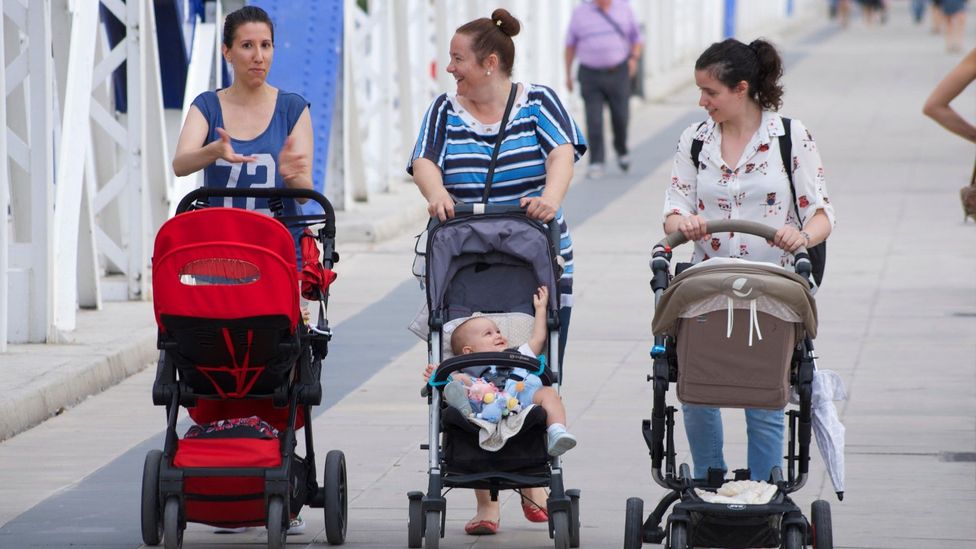
We miss those who - while non close friends - were a casual, enjoyable part of our solar day to day lives, the researchers found
Patulny and Bower found many people reported missing these micro-interactions with people in their communities, which are nearly impossible to facilitate via digital advice. "The ability to just stop, gossip, laugh, joke and all the things that yous do outside the meetings – that doesn't happen when you lot are meeting online," says Patulny. "The extra peripheral contact has been lost, and that's an important loss."
In that location is a risk of decay of social networks without these petty interactions, he says, as they help to really connect to people. Every bit for whether nosotros can pick these friendships back up post-pandemic, Bower points to recent evidence from the UK suggesting that people who were lonely before Covid were probable to be slightly lonelier later on, merely others did not experience long-term changes. She expresses some business organisation, however, that an extended period of loneliness for some people could brand little interactions feel more challenging in the longer term.
"We know that people who experience loneliness for extended periods of fourth dimension starting time to experience negative persistent impacts on the way they remember and act in social situations – they are more hypervigilant of rejection, they are more socially anxious – and these can make those simple interactions more difficult and less likely to become smoothly," she says.
Reverting or changing
Bower and Patulny's research will follow their cohort as Australia continues its march out of Covid restrictions. They will survey the same cohort every three months to make up one's mind how behaviour is changing and why, and feed into a think tank that is because the mental health impacts of the pandemic. It is likewise early for any estimates of what, if any, long term social changes may set up in, but the researchers suggest that information technology could be a trivial while earlier interactions render to normal.
"I wonder if the fact that you're not used to socialising, and that now in that location is a risk associated with socialising, whether those things together volition lead to long-term impacts on the way we experience and how we are able to overcome loneliness," Bower says. Patuly says she wouldn't be surprised by a slight increase in loneliness which lasts for a few years.
However Michelle Lim, the loneliness practiced, believes that for most people, both the loss of micro-interactions and the narrowing of their social networks are temporary, tied straight to the public health emergency, and are unlikely to outlast it.
"Whether [lockdown isolation] will be significantly detrimental to your relationships will be upwardly to many factors – whether the individual is resilient, whether they have robust social networks, whether they make the efforts to maintain their friendships despite these barriers," says Lim. It is too all the same not clear, she adds, whether longer lockdowns – both government-mandated or due to peoples' need to shield for pre-existing health atmospheric condition – volition atomic number 82 to dissimilar or more pronounced outcomes.
Lim says it is possible that, for the firsthand future, face-to-face interactions may change as we remain mindful of public health. But she says it is human being nature to revert to social groups; nigh people who have broken lockdown regulations have washed then in order to see friends and family unit.
Later on we recover from the shock of these altered behaviours, she believes things will probable render to a previous normal. The chief determinants of loneliness are pretty stable, she adds. Those who were not alone earlier Covid-nineteen are unlikely to be very lonely in the long term once it is all over.
"I think for a short period there will be change," she says. "Simply we are creatures of addiction. Unless these behaviours are very, very long term, I recall we will revert back to our social groups."
Source: https://www.bbc.com/worklife/article/20201005-how-covid-19-is-changing-our-social-networks
0 Response to "When That Last Friend Becomes Single and Yall Can Go Out Being Hoes Together Again Mem"
Post a Comment